Skip to content
National Association of Attorneys General
  • For Members
    • How Do I…?
    • Member Benefits
    • Scholarships & Nominations
    • Specialized Services
    • Committees
    • Office Support
    • Member Directory
    • Account & Access
  • Events & Training
    • Event Calendar
    • Upcoming Programs
    • Training Opportunities
    • On-Demand Resources
    • CLE Credit
    • Mobile Training Requests
    • Our Faculty
  • Resources
    • Policy Letters
    • Reports & Publications
    • Research & Data
    • Attorney General Journal
    • Newsroom
    • Databases & Tools
    • Public Resources
  • Attorney Generals
    • What Attorneys General Do
    • Attorneys General Office 101
    • Find my AG
    • How AGs Are Selected
    • Issues Attorney Generals Work On
    • Consumer Complaint Guidance
    • Attorney General Elections
    • Past Attorneys General
    • Careers in Attorney General Offices
  • NAMFCU
    • History of NAMFCU
    • About NAMFCU
    • NAMFCU
    • About the Medicaid Fraud Control Units
    • NAMFCU Trainings
    • MFCU Member Hub
    • Reporting Fraud and Abuse
    • Careers with a MFCU
  • About
    • About Us
    • NAAG History
    • Leadership
    • Staff
    • Regions
    • Careers at NAAG
    • FAQs
    • SAGE
    • Contact Us
  • Log In
PUBLIC RESOURCES           NEWSROOM           CONTACT US
FIND MY AG         CREATE ACCOUNT
National Association of Attorneys General
  • For Members
    • How Do I…?
    • Member Benefits
    • Scholarships & Nominations
    • Specialized Services
    • Committees
    • Office Support
    • Member Directory
    • Account & Access
  • Events & Training
    • Event Calendar
    • Upcoming Programs
    • Training Opportunities
    • On-Demand Resources
    • CLE Credit
    • Mobile Training Requests
    • Our Faculty
  • Resources
    • Policy Letters
    • Reports & Publications
    • Research & Data
    • Attorney General Journal
    • Newsroom
    • Databases & Tools
    • Public Resources
  • Attorney Generals
    • What Attorneys General Do
    • Attorneys General Office 101
    • Find my AG
    • How AGs Are Selected
    • Issues Attorney Generals Work On
    • Consumer Complaint Guidance
    • Attorney General Elections
    • Past Attorneys General
    • Careers in Attorney General Offices
  • NAMFCU
    • History of NAMFCU
    • About NAMFCU
    • NAMFCU
    • About the Medicaid Fraud Control Units
    • NAMFCU Trainings
    • MFCU Member Hub
    • Reporting Fraud and Abuse
    • Careers with a MFCU
  • About
    • About Us
    • NAAG History
    • Leadership
    • Staff
    • Regions
    • Careers at NAAG
    • FAQs
    • SAGE
    • Contact Us
  • Log In

Supreme Court Allows Creditors to Retain Assets Lawfully Seized Prior to Bankruptcy

Home / Bankruptcy / Supreme Court Allows Creditors to Retain Assets Lawfully Seized Prior to Bankruptcy
February 9, 2021 Bankruptcy, Supreme Court
Share this

The Bankruptcy Code (title 11 of the United States Code) provides numerous protections for debtors when they file a bankruptcy petition. Those protections include an automatic stay of “any act to obtain possession of . . . or to exercise control over property of the estate.” §362(a)(3). Section 542(a) of the Code states that a creditor “shall deliver to the trustee” any property of the estate, but subject to a proviso that guarantees that a party holding an interest (such as a lien) in estate property is entitled to “adequate protection” of that interest before the creditor can be required to allow the debtor to use that property. § 363(e).

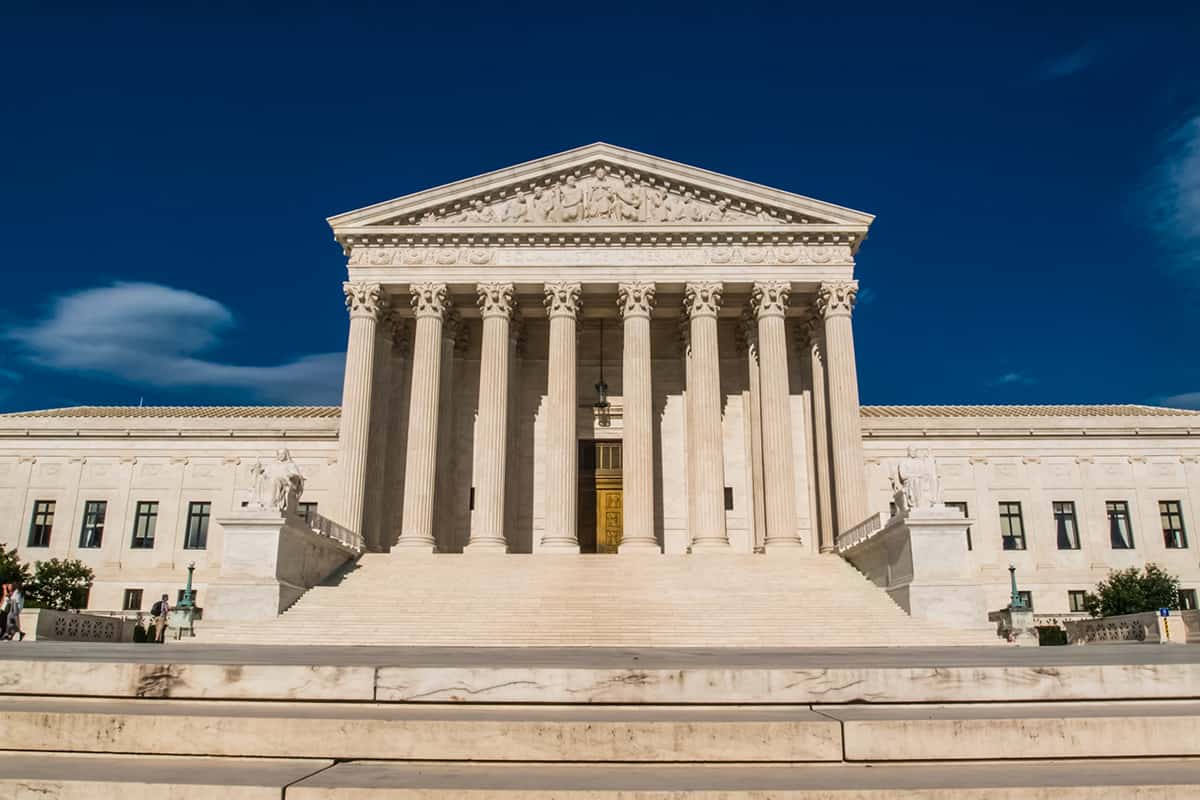
In its recent decision, City of Chicago, Ill. v. Fulton et. al, No. 19-357 2021 WL 125106 (U.S. Jan. 14, 2021), the U.S. Supreme Court discussed how those provisions should be reconciled. The City of Chicago had a program under which it would impound vehicles of drivers who had accumulated a significant number of unpaid traffic and/or parking violations. Fulton and other debtors filed Chapter 13 petitions (which are set up to allow debtors to pay off some or all of their obligations over time) and requested that their cars be returned immediately. The City refused to do so, in large part because its statutory lien on the vehicles was a possessory lien that, the City asserted, would be lost if it returned the vehicles. The bankruptcy court and the Seventh Circuit held that the City’s actions violated the automatic stay. The issues addressed by the Supreme Court were whether mere “retention” of property lawfully seized before the petition date was an “act to . . . exercise control” over that property, and whether the creditor had an affirmative duty to turn over the vehicles after the Chapter 13 filing under Section 542.

The case aroused considerable amicus interest with briefs in support of Chicago filed by the United States, the International Municipal Lawyers’ Association, the National Association of Counties, the National League of Cities, the United States Conference of Mayors and other governmental groups, all of which argued that, as a matter of statutory construction, retaining possession was not an “act,”  that Section 542 language was not self-executing, and that, to regain their vehicles, debtors must file an “adversary proceeding,” which is largely akin to a non-bankruptcy complaint. The debtors, on the other hand, did not lack for supporters. They were represented by Eugene Wedoff, a recently-retired and very highly respected bankruptcy judge from Illinois, and had several amicus briefs filed on their behalf including by the National Associations of Chapter Thirteen and Bankruptcy Trustees, the National Consumer Bankruptcy Rights Center, and several well-known bankruptcy law professors.

On the merits, the Supreme Court ruled unanimously in favor of the City based on a straightforward statutory analysis. In large part, it started and ended with the idea that the word “act” is normally thought to require that something affirmative occur, not just a maintenance of the status quo. It further held that the turnover provisions in Section 542 were not automatically self-executing, because there needed to be a method for the creditor to demand the adequate protection that it was entitled to under Section 363. There were no dissents, but there was a concurrence by Justice Sotomayor that focused on the practical crux of the problem here – i.e., that, while she agreed with the Court that the City had the better of the bare legal argument, Mr. Fulton and his supporters had a strong argument on the real-life consequences aspect of the dispute.

The basic problem is that while filing an adversary proceeding may not be overly burdensome for a business seeking to deal with a lien on a major piece of equipment, it is likely to be quite difficult for individuals in Chapter 13 to come up with the additional funds necessary for such a hearing – just as they could not find the money to pay the fines in the first place. As a result, they may have no way to regain their vehicles for an extended time and, absent those vehicles, they often may not be able to reach their jobs, earn their wages, or comply with their proposed Chapter 13 plan payments. If so, and if their case fails, the result can leave all creditors, including the City, worse off, Justice Sotomayor noted. The City and its other governmental supporters, on the other hand, argued that the alternative reading Mr. Fulton and his supporters suggested, under which the government should be required to file emergency motions in each case to obtain protection for its interests, is not very workable either.

Justice Sotomayor closed with a very sensible conclusion: “Ultimately, however, any gap left by the Court’s ruling today is best addressed by rule drafters and policymakers, not bankruptcy judges.”  The Rule Committee could consider specific treatment to speed up and/or simplify this category of small asset turnovers and Congress too could enact a statutory fix, tailored to this particular problem. Until then, this ruling leaves creditors in general and governmental entities in particular with two statutory construction holdings that provide them with significant benefits going forward.

Additional Resources

Discover the role of attorneys general in bankruptcy enforcement.

Related Posts

Related Posts

Bankruptcy next exit sign

Notice Issues in the Age of Social Media

U.S. Supreme Court

Challenge to the FTC’s Restitution Authority to be Heard by Supreme Court

Bankruptcy court sign

Supreme Court Allows Creditors to Retain Assets Lawfully Seized Prior to Bankruptcy

Latest News

  • Bipartisan Coalition of 45 Attorneys General Backs Pharmacy Benefit Manager (PBM) Transparency Rule April 17, 2026
  • Supreme Court Report, Volume 33, Issue 10 April 8, 2026
  • Supreme Court Report, Volume 33, Issue 9 April 1, 2026
  • Bipartisan Coalition of Attorneys General Urges Congress to Pass Legislation Against Illicit Xylazine March 31, 2026
  • Supreme Court Report, Volume 33, Issue 8 March 23, 2026

Recent Posts

  • Bipartisan Coalition of 45 Attorneys General Backs Pharmacy Benefit Manager (PBM) Transparency Rule
  • Supreme Court Report, Volume 33, Issue 10
  • Supreme Court Report, Volume 33, Issue 9
  • Bipartisan Coalition of Attorneys General Urges Congress to Pass Legislation Against Illicit Xylazine
  • Supreme Court Report, Volume 33, Issue 8

Stay Connected

Get NAAG updates and training alerts.

Create an account and then select your preferred mailings (otherwise, we will send you everything).

Create Account
Set Marketing Preferences
Log In to Your Account
White Logo for the National Association of Attorneys General

1850 M Street NW, Suite 1200
Washington, DC  20036
Telephone: (202) 326-6000
support@naag.org

Our Work

  • Bankruptcy
  • Consumer Protection
  • Tobacco and Public Health
  • Center for Supreme Court Advocacy

Resources

  • Attorney General Journal
  • CLE Policy and Guidelines
  • Event Calendar
  • NAAG Policy Letters
  • Reports & Publications

ABOUT

  • Leadership
  • Staff
  • NAAG History
  • Mission Foundation
  • Careers at NAAG
  • Contact Us

© 2026 Copyright National Association of Attorneys General

Website by Yoko Co

Internal Feedback / Report an Error

Request an Update / Report an Error

The change you are requesting will be linked to this page. The URL for the page will be included in a hidden field when the form is submitted.
Please enter your change or describe your request. Be sure to reference where the error appears on the page and what needs to be done specifically.
Upload any files that need to be linked to this page. PDF only. Submit another request if you have more than five files to upload.
Drop files here or
Accepted file types: pdf, docx, xls, Max. file size: 128 MB, Max. files: 5.

    Who is requesting this change?(Required)

    Scroll To Top

    Insert/edit link

    Enter the destination URL

    Or link to existing content

      No search term specified. Showing recent items. Search or use up and down arrow keys to select an item.
        This site is registered on Toolset.com as a development site.
        To provide you more clarity about how we collect, store and use personal information, and your rights to control that information, we have updated our privacy policy, which also explains how we use cookies. You consent to our cookies if you continue to use our website.