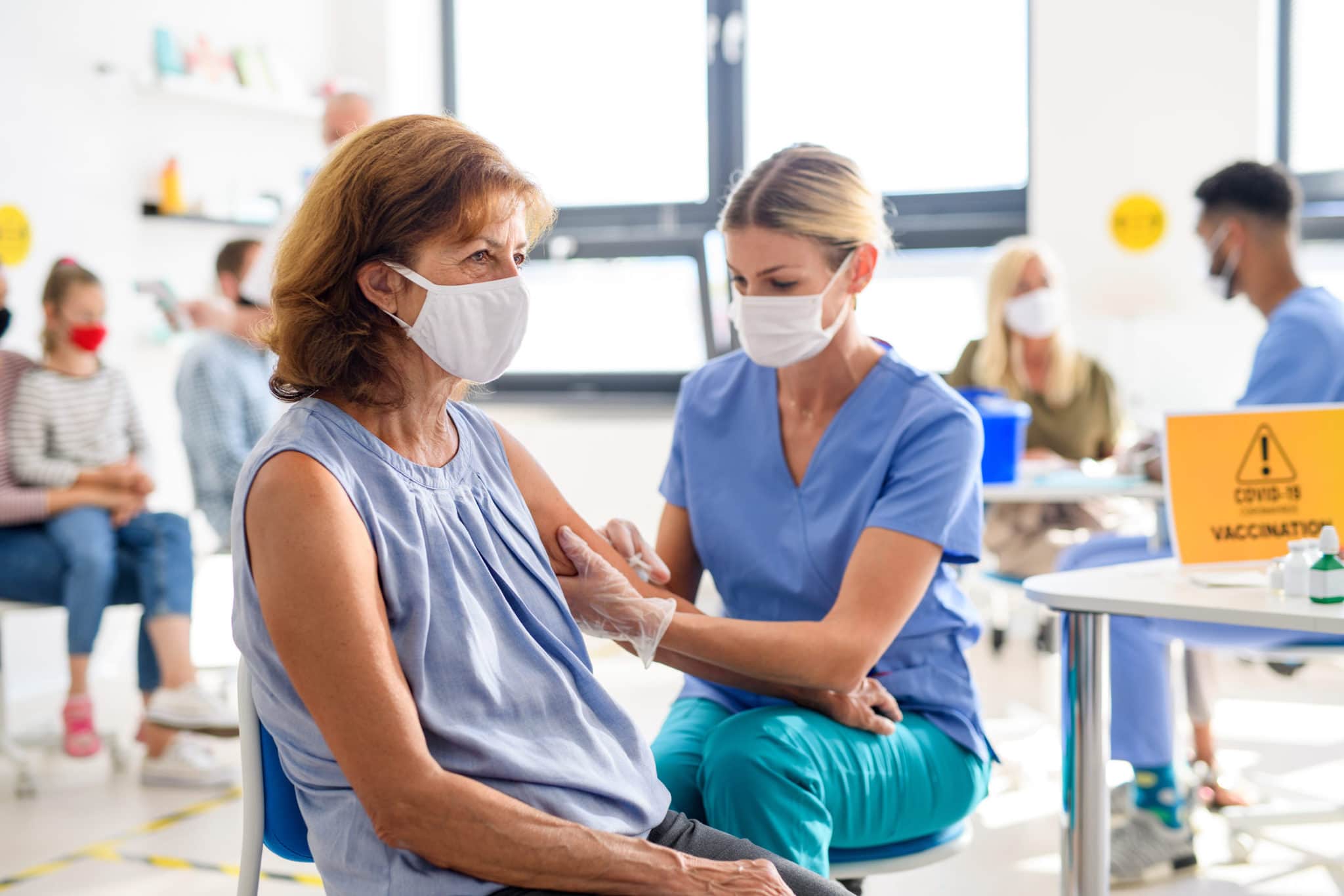
The distribution of three safe and efficacious vaccines to prevent COVID-19 has continued to ramp up both globally and domestically. Here in the U.S., average daily rates of vaccines administered has increased from 1.5 million at the end of February to close to 2.5 million in March. On March 24, the U.S. reached over 130 million total doses administered with 46.3 million persons (14% of the total U.S. population) fully vaccinated (i.e., having received either both doses of Pfizer/BioNTech or Moderna vaccine or one dose of the Johnson & Johnson/Janssen vaccine). Most states have or will soon start expanding eligibility to persons living with one or more medical condition that puts them at high-risk of severe COVID-19. Notably Alaska became the first state to open eligibility to all individuals 16 years of age or older as the Biden Administration encouraged all states to follow suit no later than May 1.
On February 27, the U.S. Food and Drug Administration (FDA) authorized a third safe and effective COVID-19 vaccine from Janssen, a subsidiary of Johnson & Johnson. In the U.S. arm of their Phase III trial, the Johnson & Johnson/Janssen vaccine demonstrated 72% efficacy against moderate to severe disease and 85% against severe disease. Most importantly, like Pfizer/BioNTech and Moderna, the vaccine provided 100% protection against hospitalization and death. When looking at the efficacy of various vaccines, it is important to note that the trials were conducted at very different times in the pandemic and in different geographic regions. The Pfizer/BioNTech and Moderna trials were implemented in fall 2020, well before the largest surge in cases following the winter holidays here in the U.S. and globally. As well, variants of concern (i.e., those that early data suggest may be more transmissible and/or more deadly) were not yet identified at the time of the earlier trials.
Viral variants occur as the virus continuously mutates and passes between people. While most variants do not change the virus in problematic ways (e.g., make the virus easier to transmit), there are at least three variants that are concerning to public health officials here in the U.S. and globally. To prevent the spread and emergence of dangerous variants, we must speed up and expand current vaccination efforts as well as proactively planning for the potential need for booster shots or modified vaccines in the future.
On February 22, the FDA issued streamlined guidance for manufacturers of COVID-19 tests, treatments, and vaccines regarding the emergence of variants. Already, Pfizer/BioNTech and Moderna are gathering data on how their vaccines protect against the three variants of concern and whether booster shots will be helpful or necessary. Also, Pfizer/BioNTech plans to test giving a third dose of their vaccine to previous trial participants vs. a modified version that targets variants. Moderna, meanwhile, has already sent a variant-specific version of their vaccine to the National Institutes of Health (NIH) for clinical study. Finally, Johnson & Johnson/Janssen have a separate ongoing study that will assess the efficacy of a two-dose version of their vaccine.
Although time is of the essence in blunting the impact of variants and controlling the pandemic, equity and fairness are equally critical. The majority of Americans would at least consider getting a COVID-19 vaccine, yet there are differences in the rates and underlying reasons for vaccine-related apprehension or refusal among some groups. Hesitancy is not the only reason some individuals are not accessing vaccines for which they are eligible, however. As vaccine supplies have initially been scarce, anecdotal and quantitative data have emerged that highlight the challenges many face in securing and reaching an appointment. Inequities persist across race, ethnicity, income, disability, etc. Reports indicate that there is no “one-size-fits-all” approach that will work for everyone who will need or want to be vaccinated. Instead, federal, state, and local partners must nimbly develop, implement, adapt, and communicate a range of options that meets individuals where they are. There are several actions federal and state/territory governments have taken or are considering taking to address these barriers.
One approach is to leverage safe and effective vaccines that are easier to store and distribute for hard-to-reach communities. The Johnson & Johnson/Janssen vaccine has two important logistical advantages: (1) it is a single shot; and (2) it can be stored at refrigeration temperatures for up to six months. As such, some state and local health officials have decided to allocate doses of that vaccine specifically for homebound individuals. In addition, the FDA has authorized the Pfizer/BioNTech vaccine to now be stored at standard pharmacy freezer temperatures as opposed to the original “super cold” requirements. This will allow it to more easily be deployed at vaccine sites where super cold freezers are not available.
Another strategy is to expand and diversify the vaccination sites available to communities. For example, the federal government has allocated vaccine doses directly to pharmacy partners and community health centers with the goal of ensuring access in settings where individuals, including the most vulnerable communities, already receive services or are connected to care. Federal and state governments are also working to create mobile vaccination clinics, often in coordination with mass vaccination centers.
Finally, state and local health departments are choosing to adapt their systems and processes to better meet the needs of vulnerable and/or underserved communities, including allocating additional doses or appointments to certain groups or geographic areas based on the Centers for Disease Control and Prevention’s (CDC) Social Vulnerability Index (SVI) or other methods. Similarly, health departments have developed call or text centers in various languages that allow individuals with less-than-optimal internet to more easily schedule appointments and receive key information on the vaccines.
In the weeks ahead, members of the attorney general community should monitor and be aware of the following possible key events related to the vaccines’ rollout:
- Supply of COVID-19 vaccines soon exceeding demand. As a result, a concerted effort to address individual and collective hesitancy and barriers in accessing the vaccines will be even more critical.
- Additional vaccine manufacturers possibly seeking authorization in the U.S., including the two-dose University of Oxford/AstraZeneca and Novavax vaccines.
- Further increased vaccine supply secured by the U.S. government via new or amended contracts with manufacturers.
- Increased rates of vaccine production and distribution as vaccine manufacturers and state/local health departments ramp-up capacity and efficiencies, like the collaboration between Johnson & Johnson and Merck to produce additional doses of the Johnson & Johnson/Janssen vaccine.
- Updated evidence-based guidance on how fully-vaccinated individuals may return to normal pre-pandemic activities.
- Further communications campaigns to increase vaccine uptake overall and among key population groups (e.g., the Ad Council’s COVID-19 Vaccine Education campaign).
- Additional data gathered and published regarding the effects of COVID-19 variants on vaccine efficacy as well as rates of transmission and mortality for those variants.
- Additional data gathered and published regarding the long-term effectiveness of existing COVID-19 vaccines (i.e., when or if individuals will need to be revaccinated) and their ability to prevent transmission of COVID-19, including among asymptomatic cases.
- Additional data gathered and published regarding the efficacy and safety of authorized COVID-19 vaccines among key populations (e.g., pregnant women, immunocompromised individuals, children/adolescents aged 12 – 18 years of age).
Throughout 2021, NAAG will continue to provide informational updates and training opportunities to the attorney general community as COVID-19 vaccine distribution and related legal issues evolve. For more information on NAAG’s response to the COVID-19 pandemic, visit NAAG’s Members-Only COVID-19 Resource Page. Attorney general staff can request access to the page. View additional public health-related updates from NAAG.