
Skip to content
National Association of Attorneys General
  • For Members
    • How Do I…?
    • Member Benefits
    • Scholarships & Nominations
    • Specialized Services
    • Committees
    • Office Support
    • Member Directory
    • Account & Access
  • Events & Training
    • Event Calendar
    • Upcoming Programs
    • Training Opportunities
    • On-Demand Resources
    • CLE Credit
    • Mobile Training Requests
    • Our Faculty
  • Resources
    • Policy Letters
    • Reports & Publications
    • Research & Data
    • Attorney General Journal
    • Newsroom
    • Databases & Tools
    • Public Resources
  • Attorney Generals
    • What Attorneys General Do
    • Attorneys General Office 101
    • Find my AG
    • How AGs Are Selected
    • Issues Attorney Generals Work On
    • Consumer Complaint Guidance
    • Attorney General Elections
    • Past Attorneys General
    • Careers in Attorney General Offices
  • NAMFCU
    • History of NAMFCU
    • About NAMFCU
    • NAMFCU
    • About the Medicaid Fraud Control Units
    • NAMFCU Trainings
    • MFCU Member Hub
    • Reporting Fraud and Abuse
    • Careers with a MFCU
  • About
    • About Us
    • NAAG History
    • Leadership
    • Staff
    • Regions
    • Careers at NAAG
    • FAQs
    • SAGE
    • Contact Us
  • Log In
PUBLIC RESOURCES           NEWSROOM           CONTACT US
Log In
National Association of Attorneys General
  • For Members
    • How Do I…?
    • Member Benefits
    • Scholarships & Nominations
    • Specialized Services
    • Committees
    • Office Support
    • Member Directory
    • Account & Access
  • Events & Training
    • Event Calendar
    • Upcoming Programs
    • Training Opportunities
    • On-Demand Resources
    • CLE Credit
    • Mobile Training Requests
    • Our Faculty
  • Resources
    • Policy Letters
    • Reports & Publications
    • Research & Data
    • Attorney General Journal
    • Newsroom
    • Databases & Tools
    • Public Resources
  • Attorney Generals
    • What Attorneys General Do
    • Attorneys General Office 101
    • Find my AG
    • How AGs Are Selected
    • Issues Attorney Generals Work On
    • Consumer Complaint Guidance
    • Attorney General Elections
    • Past Attorneys General
    • Careers in Attorney General Offices
  • NAMFCU
    • History of NAMFCU
    • About NAMFCU
    • NAMFCU
    • About the Medicaid Fraud Control Units
    • NAMFCU Trainings
    • MFCU Member Hub
    • Reporting Fraud and Abuse
    • Careers with a MFCU
  • About
    • About Us
    • NAAG History
    • Leadership
    • Staff
    • Regions
    • Careers at NAAG
    • FAQs
    • SAGE
    • Contact Us
  • Log In

Antisemitism in America and Its Recent Resurgence

Home / Extremism and Hate Crimes / Antisemitism in America and Its Recent Resurgence
March 4, 2021 Extremism and Hate Crimes
Share this

In a year that began with Congress being assaulted by a group that included individuals wearing “Camp Auschwitz” shirts and displaying symbols of hate, it is clear that hate and antisemitism is alive and well in the United States. To help address the rise of domestic antisemitic and hate incidents, NAAG President and District of Columbia Attorney General Karl Racine recently partnered with the American Jewish Committee (AJC) to provide virtual training on identifying and combating antisemitism to over 300 registrants from the attorney general community as part of his 2021 NAAG Presidential Initiative, “The People v. Hate: Standing Up for Humanity.” At the core of the 2021 NAAG Presidential Initiative are two goals: raising awareness of hate and related violence and preventing hate from taking root in our communities. The joint training with AJC worked towards accomplishing both those goals by educating attorney general staff within our own community. Some of the discussions included recognizing antisemitic tropes and conspiracy theories, a history of antisemitism in the United States, and how attorney general staff can incorporate this knowledge into their personal and professional lives.

In the Anti-Defamation League’s (ADL) annual Audit of Antisemitic Incidents, researchers found that 2019 had the highest level of antisemitic activity ever recorded since the ADL began tracking incidents in 1979. This included a horrifying 56% increase in assaults over the preceding year. The International Holocaust Remembrance Alliance working definition of antisemitism “is a certain perception of Jews, which may be expressed as hatred toward Jews. Rhetorical and physical manifestations of antisemitism are directed toward Jewish or non-Jewish individuals and/or their property, toward Jewish community institutions and religious facilities.” From anonymous social media trolls to recently elected members of Congress, antisemitism and the dangerous perception it creates continues to evolve and reveal itself in numerous ways.

During the joint training with the AJC, facilitators discussed one of the most common ways antisemitism seeps into our society: false conspiracy theories. The most notable theme in antisemitic conspiracy theories throughout history has been the Rothschild family. Accusing the Rothschilds, a Jewish family that became wealthy and prominent during the 18th century, of everything from controlling the weather to assassinating six U.S. Presidents is one of the most frequently used antisemitic tropes in modern history. The tactic of blaming the Rothschild family for the world’s problems with often outlandish falsehoods was first used by a London newspaper that published “The Rothschild Libel” pamphlet in 1846. Signed by Satan, the pamphlet was filled with derogatory antisemitic language and is demonstrably false.

The United States has a long history of antisemitic incidents perpetrated by individuals who acted on their belief in antisemitic tropes and conspiracy theories. This includes violence such as the 1915 lynching of Leo Frank in Atlanta, the only known Jewish lynching in American history and the inspiration for the founding of the ADL, and the 2018 shooting at the Tree of Life Synagogue in Pittsburgh, where the assailant yelled “all Jews must die,” before killing eleven congregants. Non-violent crimes motivated by antisemitism have also been used as tools to intimidate and create fear, such as the vandalism of Jewish headstones in the Chesed Shel Emeth Society cemetery in Missouri. After the incident received international attention, then-Vice President Mike Pence travelled to Missouri to help clean up the vandalized cemetery and issued a statement that “there is no place in America for hatred or acts of prejudice or violence or antisemitism.” Just hours after the training for attorney general staff concluded, several statutes erected as memorials to students killed in the Holocaust were destroyed in Tulsa at the Sherwin Miller Museum of Jewish Art.

A recurring theme during all discussions of hate, including antisemitism, is the underreporting of hate incidents. All hate crime data reported annually through the Federal Bureau of Investigation’s Uniform Crime Reporting Program is completely voluntarily. There is a wide range of reasons victims choose not to report as well as reasons why government data would not capture reports. For victims, a hate crime or incident may cause them to feel shame or embarrassment that would cause them not to report the incident to local authorities. In certain regions, a history of indifference or inaction by authorities could also convince victims that there is no reason for them to bother to report the incident. For law enforcement, there is also no national standard for or definition of a hate incident. What might be considered a hate crime in one part of the country might not be seen the same way in another region, for example. In addition to a lack of a national standard, many jurisdictions do not provide proper training to help law enforcement know how to recognize and properly report a hate incident.

As public officials, attorneys general have a platform that allows them to combat hateful and antisemitic disinformation. By partnering with organizations like AJC, NAAG continues to support coordinated efforts among attorneys general and partners dedicated to eliminating hate. All types of hate are interconnected. By educating and growing awareness of antisemitism, attorneys general around the country are helping fight hate in all forms.
 

Related Posts

Related Posts

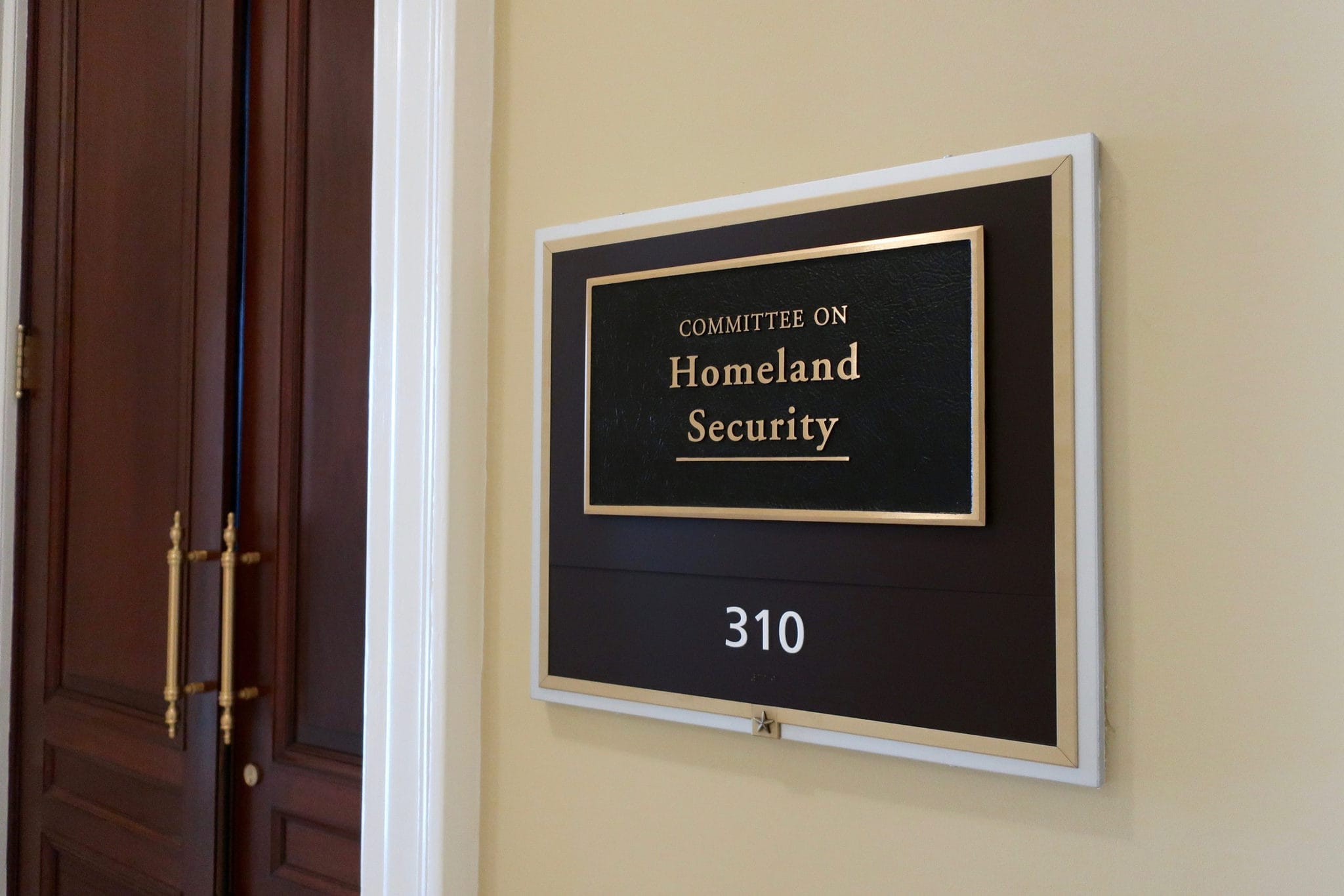
U.S. House of Representatives Committee on Homeland Security sign outside meeting room

Attorneys General Lead National Discussion with Congress on State Responses to Domestic Terrorism

Latest News

  • Bipartisan Coalition of 45 Attorneys General Backs Pharmacy Benefit Manager (PBM) Transparency Rule April 17, 2026
  • Supreme Court Report, Volume 33, Issue 10 April 8, 2026
  • Supreme Court Report, Volume 33, Issue 9 April 1, 2026
  • Bipartisan Coalition of Attorneys General Urges Congress to Pass Legislation Against Illicit Xylazine March 31, 2026
  • Supreme Court Report, Volume 33, Issue 8 March 23, 2026

Recent Posts

  • Bipartisan Coalition of 45 Attorneys General Backs Pharmacy Benefit Manager (PBM) Transparency Rule
  • Supreme Court Report, Volume 33, Issue 10
  • Supreme Court Report, Volume 33, Issue 9
  • Bipartisan Coalition of Attorneys General Urges Congress to Pass Legislation Against Illicit Xylazine
  • Supreme Court Report, Volume 33, Issue 8

Stay Connected

Get NAAG updates and training alerts.

Create an account and then select your preferred mailings (otherwise, we will send you everything).

Create Account
Set Marketing Preferences
Log In to Your Account
White Logo for the National Association of Attorneys General

1850 M Street NW, Suite 1200
Washington, DC  20036
Telephone: (202) 326-6000
support@naag.org

Our Work

  • Bankruptcy
  • Consumer Protection
  • Tobacco and Public Health
  • Center for Supreme Court Advocacy

Resources

  • Attorney General Journal
  • CLE Policy and Guidelines
  • Event Calendar
  • NAAG Policy Letters
  • Reports & Publications

ABOUT

  • Leadership
  • Staff
  • NAAG History
  • Mission Foundation
  • Careers at NAAG
  • Contact Us

© 2026 Copyright National Association of Attorneys General

Website by Yoko Co

Internal Feedback / Report an Error

Request an Update / Report an Error

The change you are requesting will be linked to this page. The URL for the page will be included in a hidden field when the form is submitted.
Please enter your change or describe your request. Be sure to reference where the error appears on the page and what needs to be done specifically.
Upload any files that need to be linked to this page. PDF only. Submit another request if you have more than five files to upload.
Drop files here or
Accepted file types: pdf, docx, xls, Max. file size: 128 MB, Max. files: 5.

    Who is requesting this change?(Required)
    Scroll To Top

    Insert/edit link

    Enter the destination URL

    Or link to existing content

      No search term specified. Showing recent items. Search or use up and down arrow keys to select an item.
        This site is registered on Toolset.com as a development site.
        To provide you more clarity about how we collect, store and use personal information, and your rights to control that information, we have updated our privacy policy, which also explains how we use cookies. You consent to our cookies if you continue to use our website.